
The Age of Artists

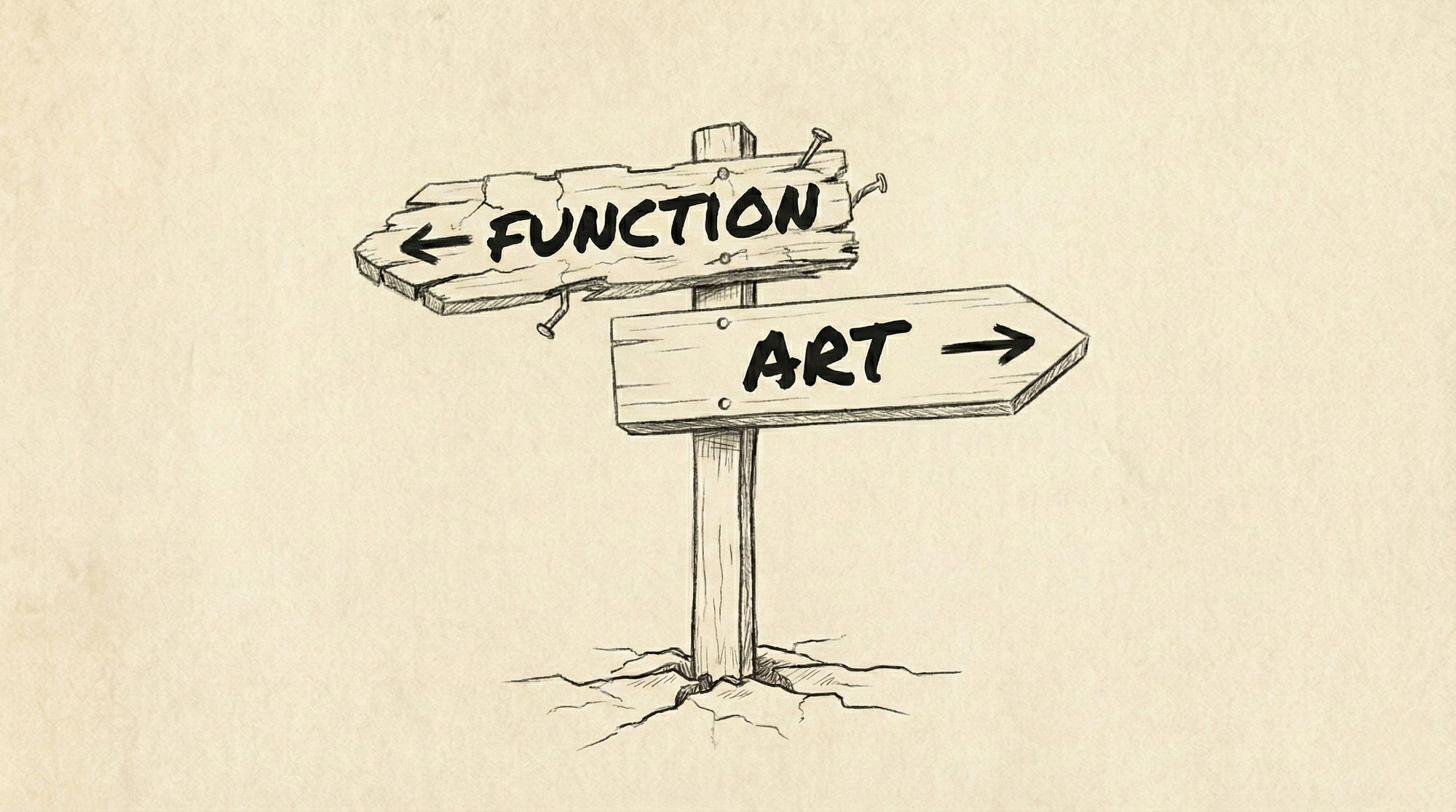
No matter if you're hyperbolic or cynical on AI, the toothpaste is out of the tube. The advancement of humanity is now inexorably interwoven with the advancement of Artificial Intelligence.
Of course, the effects of this will ripple through everything we do — business, entrepreneurship, relationships, education, healthcare, government.
While we're working out whether this spells our extinction or our immortality, there's a more immediate topic we need to talk about:
The total upending in the purpose of human work.
Ultimately, the machines are going to be able to do everything we can do. But faster, cheaper and more perfectly. Which leads to the obvious question: what do all the humans do now?
Despite the temptation, the answer is not "nothing". Human greed and curiosity will always drive action.
But there's another, bigger reason. A loophole that keeps humans in work forever, regardless of the machines' abilities:
Choice.
Even when the machines can do everything we can do, we won't want them to.
So the question's not what humans can do that machines can’t.
It’s what humans choose to leave to humans, even when the machine might do it better.
Value ≠ utility.
We still buy paintings, despite the invention of photography.
We still put people in charge, even when software could optimise the system.
We still choose Taylor Swift, even when Suno exists.
As long as humans still decide where money goes, human work is infinite. It’s just its form, nature, and meaning must change entirely. Almost overnight.
How?
In the years ahead, no matter your profession, the work that will matter the most (and be most sought-after) will move away from function, and toward art.
And that doesn't mean painting and songwriting. It means any form of honest self-expression that connects us with other people, through a practiced craft or medium.
Bus drivers who make someone feel seen.
Leaders who build missions bigger than themselves.
Bricklayers who care more about the garden, than the wall they leave behind
The epicentre of value of human effort is shifting
- from functional labour (speed, scale, accuracy, optimisation)
- to artistic labour (taste, judgment, meaning, care, conviction)
For many, that might sound lovely. But there's a catch. A few in fact :
- Very few of us know how to MAKE art. Let alone EARN from it
- Very few organisations know how to HIRE for it or LEAD it
- Very few systems know how to VALUE it, rather than leaving it as an aesthetic garnish
We’re about to see a tidal wave of change. Life-altering job losses at a very large scale, and a rapid erosion of career certainty. But the real story here isn’t about redundancy. It’s about something quieter, slower, and harder to see at first. A total reevaluation of our skills, identity, and purpose.
I call it the great migration
toward an Age of Artists.

For 20 years I’ve worked inside boardrooms and agencies helping organisations grow. Across every industry, the same truth kept surfacing: the work that lasts is rooted in real human needs, shaped by taste and judgment, and done by people who care. AI doesn’t just amplify that. It makes it existential.
So I’ll be writing regularly here on what it now takes to stay relevant, fulfilled, and economically valuable as humans. I’m calling this era The Age of Artists.
If this resonated, subscribe to get the next posts in your inbox.